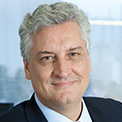
Sur bids farewell to Pedro Paulo Poppovic, a role model for those who remain committed to building a better future.
Pedro Paulo Poppovic was the first editor of the Sur Journal. He was responsible for the form and identity of the publication. From the outset, the objective of Sur was to foster debate on truly cosmopolitan ideas surrounding human rights, primarily giving a voice to players in the Global South who were often excluded from international discussions. The journal was to be published in three languages with worldwide distribution. This was no task for a beginner.
This is why we turned to Pedro Paulo. His career as an editor was already well established. He had led one of the largest publishing groups in Brazil and had conceived important editorial projects, such as Fascículos Abril, an encyclopedia, and Pensadores, a comprehensive collection of the classics, both of which sold in their thousands at newsstands throughout the country. The impact of these two projects on the democratization of knowledge and culture in Brazil, in the 1970s, in the midst of the military regime, was immeasurable.
When he accepted the challenge of working pro bono with a group of young activists, who had no prior experience in publishing, to create a journal that was both socially engaged and committed to high standards, Pedro demonstrated remarkable selflessness and generosity, as well as unending patience and dedication. His contribution to Sur—and to all those who had the privilege of working with him in producing the journal—was decisive.
As well as being a renowned editor, Pedro Paulo was also a public administrator. As Secretary for Distance Learning during the presidency of Fernando Henrique Cardoso, a childhood friend, he set up TV Escola, a broad-based education program for teachers in the state system. As the goal in the 1990s was to make basic education universally available in Brazil, there was a need for large-scale teacher training. This was his endeavor.
I mention these projects to provide a sense of Pedro Paulo’s commitment to culture and education in Brazil, the country he adopted as his own. Pedro Paulo was an extraordinary person and led an extraordinary life. He came to Brazil as a child, with his mother and grandparents. They had left Istanbul which was becoming increasingly hostile to minority groups. He graduated in Social Sciences at the University of São Paulo and became a singular intellectual because of the scope of his interests. By choosing a career as an editor, rather than working in academia—a path many of his peers had taken—he was not confined to the boundaries of a single discipline or by the language of professional scholarship. He allowed his curiosity to guide him, and it took him everywhere.
It was rare to see Pedro without a book in his hand. Fascinated, he would immediately start talking about whatever he was learning, although never in a professorial way. That is not to say he was ever gentle in his criticism or discussions. On the contrary, Pedro was always very rigorous in his analyses and forceful in debate. However, his erudition was never used to shut down conversation, particularly with younger or less well-educated debaters. Without any trace of paternalism, he would challenge us to overcome our ignorance. But he enjoyed a good argument. His eyes would twinkle, and he was nearly always smiling.
Pedro’s extraordinary life was not just about the books he read though. Throughout his life, he remained staunchly committed to the democratic cause. His generation resisted authoritarianism and fostered the transition to democracy. His home was always a meeting place for intellectuals, activists, politicians, and journalists. As editor of Editora Abril, he sought the collaboration of dissidents and political prisoners when writing and translating texts, even though this meant risking his own freedom and the business of the publishing house.
I met him after he met Malak Poppovic, at the end of the 1980s. She too was an extraordinary person. She was born in Egypt, but was a citizen of the world who also adopted Brazil as her home and built a vast network of friends and partnerships dedicated to promoting human rights. An economist and diplomat with wide experience in the United Nations High Commissioner for Refugees, she collaborated on the implementation of the Center for the Study of Violence at the University of São Paulo. She was an advisor on the Community Solidarity Program of the Presidency of the Republic, before founding Conectas in the late 1990s.
Pedro and Malak generously shared the perspectives that helped them understand the world with everyone around them. More than that, they made their home a safe and vibrant place for a new generation of democracy and human rights activists, driven by the challenge of building a fairer prejudice-free society. Thanks to their contacts and relationships at home and abroad, they also collaborated in laying the foundations for a stronger and more internationally-connected civil society. Both were instrumental in building South-South conversations, and in establishing more horizontal relationships between organizations in the North and the South.
Pedro is already sorely missed. In these times of deep polarization and the growing triumph of ignorance, his appreciation of the facts, his pluralist view of the world, his openness to dialogue—without compromising basic moral values—serve as a compass for those who remain committed to building a better future. In this respect, he was always optimistic. Like a true progressive, he was not afraid of change and believed in education and politics as instruments of transformation. The Sur Journal, among so many other projects that have impacted on the lives of millions of people, is one of his most important legacies. To honor this legacy, the journal must continue to be restless, plural, and always provocative.
Those who had the privilege of sharing his friendship miss him deeply, his warm hugs, his subtle smile, his intense, youthful gaze, and the long conversations around the table, where discussions were solely about what truly matters in life.